


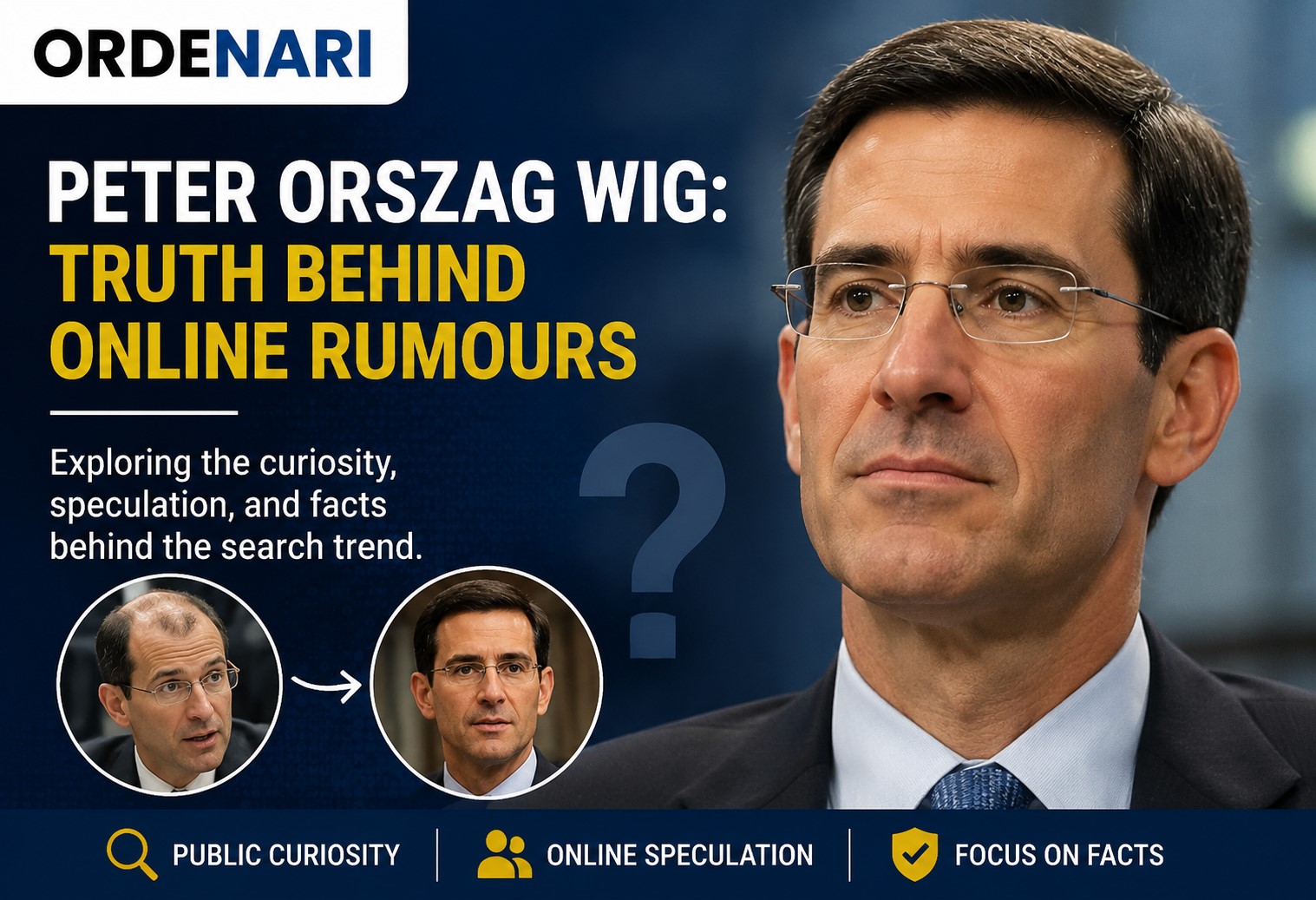
Introduction: Understanding the “peter orszag wig” Search Trend
The phrase “peter orszag wig” has become a recurring search query online, reflecting public curiosity about the appearance of well-known economist and policy expert Peter Orszag. Like many public figures who move between government, finance, and media, his professional identity is often accompanied by speculation about personal appearance.
In reality, most of these searches are not based on verified information but rather on casual observations, social media discussions, and the broader internet habit of analysing the looks of public personalities. This article explores why such a search trend exists, who Peter Orszag is, and how appearance-related narratives form around influential individuals.
Who is Peter Orszag?
Career Overview
Peter Orszag is an American economist, policy strategist, and financial executive who has worked at the highest levels of government and the private sector. He gained prominence through his role in shaping economic policy during major fiscal discussions in the United States and later transitioned into leadership roles in global finance and investment banking.
His career has spanned public service, academic contributions, and executive positions in major financial institutions. This combination of roles has made him a visible figure in economic policy debates, especially during periods of financial reform and budgeting discussions.
Because of this visibility, public interest in him extends beyond policy analysis and into personal curiosity, which includes appearance-related searches such as “peter orszag wig”.
Why People Search “peter orszag wig”
Public Visibility and Curiosity
When individuals operate in high-profile roles, even minor aspects of their appearance can become topics of discussion. In the case of Peter Orszag, his frequent appearances in financial media and policy discussions have made him recognisable to a wide audience.
The search term “peter orszag wig” likely originates from viewers noticing changes in hair appearance over time or simply comparing older and newer photographs. In most cases, such searches are driven by curiosity rather than any confirmed claim or public statement.
Influence of Online Search Behaviour
Search engines tend to amplify unusual or frequently typed phrases. Once a keyword like “peter orszag wig” appears in search suggestions, more users click it out of curiosity, reinforcing the trend. This creates a cycle where speculation gains visibility even without credible sources behind it.
Public Appearance and Scrutiny of Leaders
Constant Visual Exposure
Public figures like Peter Orszag often appear in televised interviews, panel discussions, and press briefings. Unlike private individuals, their appearance is repeatedly documented across different years, lighting conditions, and media formats.
This constant visibility leads audiences to notice even small differences in grooming, hairstyle, or presentation. Over time, these observations can evolve into broader discussions, sometimes unrelated to the individual’s actual professional contributions.
The Role of Media Framing
Media platforms often focus on personality-driven narratives because they attract attention. While Peter Orszag is primarily known for his economic expertise, online discussions sometimes shift towards superficial traits, including hairstyle or grooming choices.
This shift is not unique to him; it is a common pattern for many public-facing economists, politicians, and executives.
Hair, Grooming, and Professional Image
Importance of Presentation in Public Roles
In leadership positions, appearance is often seen as part of overall professional presentation. While expertise and decision-making remain the most important factors, visual impression still plays a role in how individuals are perceived by audiences.
For someone like Peter Orszag, who frequently appears in formal economic discussions and media interviews, grooming choices are naturally noticed by viewers. This does not imply anything specific about personal grooming practices, but rather reflects how audiences engage visually with public figures.
Changing Styles Over Time
It is common for professionals in long careers to adjust hairstyles or overall appearance over time. Factors such as age, personal preference, or professional environment can influence these changes. However, without verified statements, assumptions about wigs or hairpieces remain speculative and should not be treated as fact.
Misinformation vs. Online Curiosity
How Appearance Rumours Begin
The “peter orszag wig” keyword demonstrates how quickly minor observations can turn into search trends. A single comment on social media, an edited image, or a casual remark can trigger wider speculation.
Once such ideas enter public search behaviour, they often persist regardless of whether they are accurate. This is because search algorithms prioritise popularity, not verification.
Why Verification Matters
In the digital age, not all widely searched topics are grounded in truth. Many are based on perception, humour, or misinterpretation. In the case of Peter Orszag, there is no confirmed or official information supporting claims implied by the keyword “peter orszag wig”.
Understanding the difference between curiosity-driven search terms and factual reporting is essential for responsible information consumption.
The Role of Social Media Amplification
Platforms like X (formerly Twitter), Reddit, and forums often accelerate appearance-based discussions. Once a topic gains traction, repetition can make it appear more credible than it actually is. This is especially common for public figures who already have strong media presence.
Public Figures and Privacy Boundaries
Balancing Interest and Respect
While it is natural for audiences to be curious about well-known individuals, there is an important distinction between public professional information and personal speculation. The focus of Peter Orszag’s public identity remains his work in economics, policy, and finance.
Discussions around terms like “peter orszag wig” reflect how public attention sometimes drifts away from professional contributions and towards personal attributes, even when they are not relevant.
The Broader Pattern
This phenomenon is not limited to one individual. Many public figures experience similar search trends where appearance, age, or style become unexpected focal points. It highlights how digital culture blends information with curiosity in unpredictable ways.
Conclusion: What the Search Really Represents
The search term “peter orszag wig” is less about verified fact and more about how online audiences interact with visible public figures. In the case of Peter Orszag, there is no confirmed basis for such claims; instead, the phrase reflects curiosity shaped by repeated exposure, media visibility, and internet search behaviour.
Ultimately, this trend illustrates a broader truth about digital culture: once a public figure is widely visible, even minor aspects of appearance can become subjects of speculation. Understanding this helps separate meaningful professional discussion from surface-level assumptions, keeping focus on the work and contributions that truly define a public career.
FAQs about “peter orszag wig”
1. Why do people search for “peter orszag wig”?
People usually search this term out of curiosity after noticing changes in appearance or hairstyle across different public appearances of Peter Orszag. It is mostly driven by online speculation rather than any verified information.
2. Is there any confirmed evidence that Peter Orszag wears a wig?
No. There is no verified or official information suggesting that Peter Orszag wears a wig. The topic is based on internet discussion and should not be treated as factual.
3. Why do public figures often face appearance-related rumours?
Public figures are constantly photographed and filmed, which makes even small changes in appearance noticeable. Over time, these observations can lead to assumptions or rumours, especially on social media platforms where speculation spreads quickly.
4. Does appearance speculation affect professional reputation?
It can affect public perception, but it does not change professional achievements or expertise. In the case of Peter Orszag, his reputation is primarily built on his economic and policy work, not appearance discussions.
5. How should readers approach such online search trends?
Readers should treat appearance-based search trends with caution and focus on verified information from reliable sources. Not all popular search terms reflect reality, and many are based on assumptions rather than facts.
