


As businesses grow, the processes that once worked fine with a small team and a handful of transactions start to strain under increased volume and complexity. Approvals that used to happen with a quick conversation now need formal tracking. Status updates that one person used to handle manually now need to reach multiple departments instantly. Without a way to encode and automate these growing process needs, businesses either hire more administrative staff to keep up or watch service quality decline as things fall through the cracks. NetSuite’s SuiteFlow tool addresses exactly this problem, giving businesses a way to design, automate, and scale their core processes without requiring custom code for every change. Understanding how SuiteFlow works, and why it’s so well suited to supporting growth, reveals why it has become a central tool for NetSuite administrators managing expanding organizations.
What Is SuiteFlow?
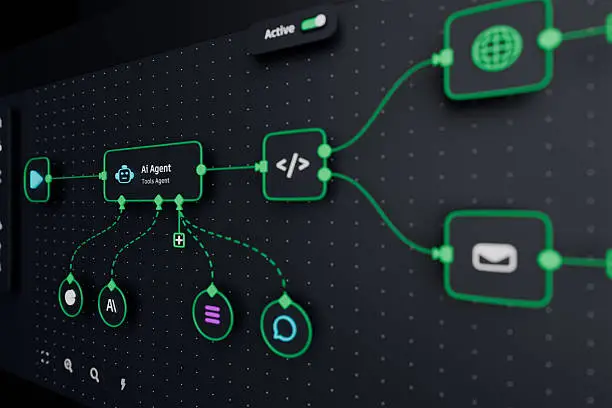
SuiteFlow is NetSuite’s visual workflow automation tool, part of the broader SuiteCloud development platform. It allows administrators and business analysts, not just developers, to build automated processes using a drag-and-drop interface rather than writing scripts. A SuiteFlow workflow defines a series of states a record can move through, along with the conditions, actions, and transitions that govern how it moves from one state to the next.
For example, a purchase order might move through states like “Pending Approval,” “Approved,” and “Rejected,” with SuiteFlow automatically routing the order to the right approver based on its dollar amount, sending notifications at each stage, and updating the record’s status without any manual intervention. Because SuiteFlow is built on a visual, point-and-click interface, business users with process knowledge but no programming background can often build and adjust these workflows directly, making it one of the more accessible tools within NetSuite’s development ecosystem.
Why SuiteFlow Matters for Growing Businesses
Growth introduces complexity in ways that are easy to underestimate. A company with ten employees might handle approvals informally, with a manager simply glancing at a request and giving a verbal go-ahead. A company with five hundred employees cannot operate that way; it needs formal routing logic, clear audit trails, and consistent enforcement of approval thresholds across many departments and locations. SuiteFlow provides the infrastructure to encode these growing process requirements directly into NetSuite, ensuring that as the business scales, its processes scale with it rather than becoming a bottleneck.
This matters because manual processes don’t scale linearly. Doubling the number of transactions a business processes doesn’t just double the administrative workload, it often multiplies it, since growing complexity introduces more edge cases, more exceptions, and more opportunities for things to be missed. Automated workflows handle this kind of growth gracefully, since the underlying logic, once correctly defined, executes the same way whether it’s processing ten records a day or ten thousand.
Common Growth-Related Use Cases for SuiteFlow
Approval routing that scales with organizational complexity. As businesses grow, approval hierarchies tend to become more elaborate, with different thresholds, departments, and escalation paths. SuiteFlow allows these increasingly complex rules to be defined once and applied consistently, automatically routing requests to the correct approver based on criteria like dollar amount, department, or location, and escalating automatically if a request goes unaddressed for too long.
Order-to-cash process automation. As transaction volume grows, manually managing the journey of an order from creation through fulfillment, invoicing, and payment becomes unsustainable. SuiteFlow can automate transitions across this entire lifecycle, ensuring that orders move through fulfillment and billing consistently regardless of how many are being processed simultaneously.
Multi-subsidiary and multi-location coordination. Businesses expanding into new regions or subsidiaries often need processes that behave slightly differently based on location-specific rules, currencies, or regulatory requirements. SuiteFlow workflows can incorporate this kind of conditional logic, applying the right rules automatically based on where a transaction originates, without requiring separate manual processes for each location.
Customer and vendor onboarding. As a business ads customers or vendors at a faster pace, manually walking each new relationship through setup steps becomes a drag on growth. SuiteFlow can automate onboarding sequences, ensuring required documentation is collected, credit checks are triggered, and accounts are properly configured before any transactions occur, all without relying on someone remembering each step.
Exception handling and escalation. As volume increases, so does the number of exceptions that need attention, whether that’s an order that fails a credit check, an invoice that doesn’t match its purchase order, or a request that exceeds normal thresholds. SuiteFlow can automatically detect these exceptions and route them to the right people for review, ensuring that growth in transaction volume doesn’t mean a proportional increase in things slipping through unnoticed.
SuiteFlow vs. Custom Scripting
One of SuiteFlow’s most valuable characteristics for growing businesses is its accessibility. Because workflows are built visually rather than through code, business analysts and administrators can often design, test, and adjust process automation without waiting on developer resources. This matters enormously for scalability, since growing businesses frequently need to adjust their processes quickly as new departments, products, or markets come online, and waiting weeks for a developer to write and test custom code can slow that adaptation considerably.
That said, SuiteFlow isn’t a complete replacement for SuiteScript. Highly complex business logic, calculations involving many variables, or processes that need to interact extensively with external systems may still require custom scripting, sometimes in combination with SuiteFlow itself, since workflows can call custom scripts as part of their action steps. Many mature NetSuite implementations use SuiteFlow for the bulk of their process automation, reserving custom development for the more intricate logic that visual workflows alone cannot handle. This combination allows businesses to move quickly on most process changes while still having the flexibility for genuinely complex requirements.
Building Workflows That Scale Well
Not every workflow is created equal when it comes to supporting long-term growth. Workflows designed thoughtfully, with clear states, well-documented conditions, and modular logic that can be adjusted without rebuilding the entire process, tend to scale gracefully as a business grows. Workflows built hastily, with overly specific hardcoded values or logic that doesn’t account for future scenarios, often need significant rework as the business changes, undermining the very efficiency they were meant to provide.
Businesses that get the most long-term value from SuiteFlow tend to follow a few consistent practices. They document the business logic behind each workflow clearly, so that future administrators understand not just what a workflow does but why it was built that way. They design workflows with reasonable flexibility, anticipating that approval thresholds, routing rules, or department structures will likely change as the business grows, rather than hardcoding values that will quickly become outdated. They also test workflow changes in a sandbox environment before deploying them to production, since a poorly tested workflow change can disrupt business-critical processes for every user relying on it.
Supporting Scalability Beyond Process Automation
Beyond the direct efficiency gains, SuiteFlow contributes to scalability in less obvious ways. Automated workflows create consistent audit trails, recording exactly when and how a record moved through each stage, which becomes increasingly valuable as a growing business faces more rigorous compliance and reporting requirements. They also reduce the dependency on specific individuals having institutional knowledge of how a process is supposed to work, since the logic is encoded directly into the system rather than living only in someone’s memory. This matters considerably as businesses grow and experience more staff turnover, since automated processes continue functioning correctly even as the people who originally managed them move on.
The Bottom Line
SuiteFlow development gives growing businesses a powerful, accessible way to encode their processes directly into NetSuite, ensuring that operational complexity grows in a controlled, automated way rather than becoming an unmanageable burden on staff. By automating approval routing, order management, onboarding, and exception handling through a visual interface that doesn’t require deep programming expertise, SuiteFlow allows businesses to adapt their processes quickly as they scale, while maintaining the consistency and audit trails that growth inevitably demands. For any business planning to grow, investing time in well-designed SuiteFlow workflows is one of the most effective ways to ensure that NetSuite scales right alongside it.
