


Introduction
The Hugo Bachega accent has become a widely discussed topic among viewers of international news, particularly BBC audiences who often hear his reporting from major global events. His voice stands out immediately, not because it is difficult to understand, but because it carries a distinct blend of influences that do not fit neatly into one traditional accent category.
In a world where most broadcasters are often expected to sound either “standard British” or “American neutral,” Hugo Bachega presents something different. His speech reflects a global background shaped by language diversity, professional journalism, and cultural adaptation. This article explores the origins, structure, characteristics, and public perception of the Hugo Bachega accent in detail.
Who Is Hugo Bachega?
Background and Journalism Career
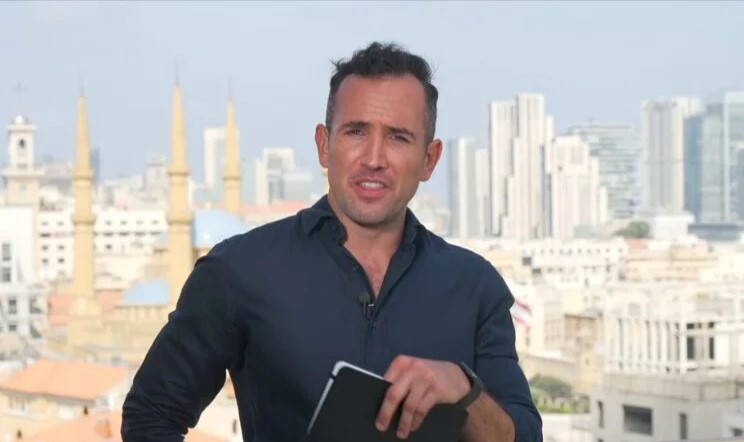
Hugo Bachega is an international journalist known for his work with global news organisations, most prominently the BBC. He has reported from high-profile conflict zones, political events, and breaking news situations around the world.
His career in international journalism has required him to communicate clearly with a global audience, often under pressure and in rapidly changing environments. This professional setting plays a significant role in shaping his speech patterns and vocal delivery.
Multilingual Influence
One of the most important aspects of his identity is his multilingual background. Being a native Portuguese speaker from Brazil and later working in English-speaking media environments has significantly influenced the way he speaks English today. This combination forms the foundation of what people recognise as the Hugo Bachega accent.
What Is the Hugo Bachega Accent?
A Hybrid International Accent
The Hugo Bachega accent is best described as an international English accent with Brazilian Portuguese influence. It is not a regional British accent such as Cockney, Scouse, or Received Pronunciation, nor is it a typical American accent.
Instead, it sits in a global category often referred to as:
- International broadcast English
- Neutral global English accent
- Foreign-influenced professional English
This type of accent is increasingly common among journalists, diplomats, and global professionals who use English as a working language rather than a native one.
Why It Sounds Distinct
The reason the Hugo Bachega accent stands out is due to its combination of:
- Portuguese-influenced pronunciation patterns
- British broadcasting clarity from professional experience
- Neutralisation of strong regional features
- Slight rhythm variations compared to native UK speakers
These combined elements make his speech sound clear, controlled, and slightly different from standard British newsroom voices.
Key Features of the Hugo Bachega Accent
Pronunciation Patterns
One of the most noticeable features of the Hugo Bachega accent is pronunciation influenced by Portuguese phonetics.
Vowel Sounds
In many cases:
- Vowels may sound slightly more open or rounded
- Certain English vowel distinctions are simplified
- Long and short vowel differences may not be as sharp as in native British accents
This is typical for speakers whose first language is Portuguese, where vowel structures differ significantly from English.
Consonant Clarity
Despite the influence of Portuguese, his consonants are generally:
- Very clear
- Carefully articulated
- Slightly softened in fast speech
This clarity is reinforced by his experience in broadcasting.
Speech Rhythm and Intonation
Syllable Timing Influence
Portuguese is a syllable-timed language, meaning each syllable tends to be given relatively equal time. This can subtly influence English speech patterns.
In the Hugo Bachega accent:
- Sentences may have a more even rhythm
- Less stress variation compared to native British accents
- A smoother flow across phrases
Controlled Intonation
His intonation is typically:
- Calm
- Neutral
- Professional
This reflects newsroom standards, where emotional exaggeration is avoided to maintain credibility.
Neutral Broadcasting Style
A major component of the Hugo Bachega accent is his professional broadcasting training. Journalists working in international news are often encouraged to adopt:
- Clear articulation
- Neutral tone
- Reduced regional markers
This results in what many people interpret as a “BBC-style accent,” although it is not strictly Received Pronunciation.
Why the Hugo Bachega Accent Develops This Way
Influence of First Language
Portuguese is the primary influence on his early speech development. When a speaker learns English later in life, certain phonetic patterns often carry over. This includes:
- Subtle vowel shifts
- Different rhythm expectations
- Slight variations in stress placement
These features become part of the speaker’s natural English identity.
Professional Environment
Working in international journalism significantly shapes speech. In broadcast media:
- Clarity is essential
- Misunderstandings must be avoided
- Neutrality is preferred
As a result, journalists like Hugo Bachega naturally adapt their accent to be more globally intelligible.
Exposure to International English
Unlike traditional native speakers who are exposed mainly to one regional dialect, international journalists often interact with:
- Multiple English accents daily
- Non-native English speakers
- Global communication environments
This exposure creates a blended, adaptable speaking style.
Public Perception of the Hugo Bachega Accent
Why Viewers Notice It
Audiences often comment on the Hugo Bachega accent because it does not fit familiar categories. People tend to expect reporters to sound either distinctly British or American, so a hybrid accent stands out.
Common observations include:
- “Very clear but different”
- “Sounds European-influenced”
- “Neutral but not British native”
Positive Reception
In most cases, his accent is viewed positively because it:
- Enhances clarity
- Sounds professional
- Is easy for international audiences to understand
Many viewers associate it with global journalism rather than local identity.
Comparison With Other News Accents
Compared to Received Pronunciation (RP)
Received Pronunciation is traditionally considered the “standard British news accent.” Compared to RP:
- Hugo Bachega’s accent is less regionally British
- More influenced by non-native phonetics
- Slightly less formal in vowel precision
- More globally neutral
Compared to American News Anchors
American broadcast accents tend to have:
- Strong rhotic “r” pronunciation
- Distinct American vowel shifts
- Consistent stress patterns
In contrast, the Hugo Bachega accent:
- Does not follow American phonetics
- Has a softer global sound
- Maintains European-influenced rhythm
Compared to Other International Journalists
Many international journalists develop similar accents due to global media environments. However, Hugo Bachega’s accent is often considered particularly noticeable due to:
- His Brazilian linguistic foundation
- Frequent field reporting
- Clear, measured delivery style
Linguistic Explanation of the Accent
Phonological Mixing
The Hugo Bachega accent is a classic example of phonological blending, where features of two or more languages combine into a stable speaking pattern.
This includes:
- English vocabulary and grammar
- Portuguese phonetic influence
- Broadcast English clarity norms
Accent Neutralisation
In professional media, speakers often undergo partial accent neutralisation. This does not erase their original accent but reduces strong regional features to improve clarity.
For Hugo Bachega, this results in:
- Reduced Brazilian accent intensity
- Increased speech clarity
- Balanced international pronunciation style
Why the Hugo Bachega Accent Matters in Modern Media
Globalisation of English
English is now a global language, spoken by millions of non-native speakers. Accents like Hugo Bachega’s reflect this shift.
They show that:
- English no longer belongs to one region
- Communication is more important than accent purity
- Global journalism requires adaptability
Representation in Journalism
His accent also represents the growing diversity in international newsrooms. It demonstrates that:
- Strong regional accents are no longer a barrier
- Multilingual journalists are essential
- Global perspectives shape modern reporting
Conclusion
The Hugo Bachega accent is best understood as a modern example of global English in action. It is neither strictly British nor purely Brazilian but instead a professional, internationally influenced way of speaking shaped by language background and journalism experience.
Its clarity, neutrality, and slight Portuguese influence make it distinctive without reducing intelligibility. In fact, its uniqueness is part of what makes it effective in global reporting environments.
As English continues to evolve as a worldwide language, accents like Hugo Bachega’s are becoming increasingly common—and increasingly important in shaping how global news is delivered and understood.
