


Introduction
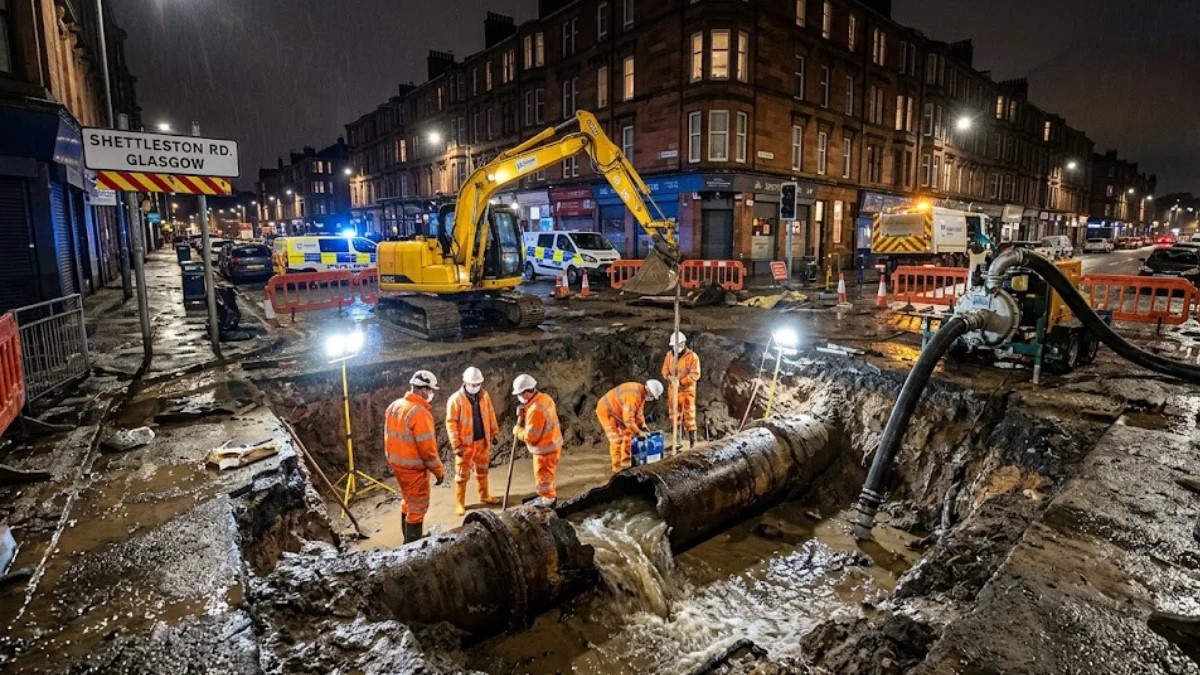
A major disruption occurred recently due to a Glasgow water main break Shettleston Road, causing widespread inconvenience for residents, businesses, and commuters across the East End of the city. Water main failures are not uncommon in ageing urban infrastructure, but when they happen on a busy route like Shettleston Road, the effects can be immediate and far-reaching.
This article provides a detailed, human-written, and informative breakdown of the incident, including what likely caused it, how it affected daily life, the response from authorities, and what residents should expect in the future.
Understanding the Glasgow Water Main Break Shettleston Road Incident
What Happened?
The Glasgow water main break Shettleston Road incident refers to a burst water pipe that led to flooding, water loss, and traffic disruption in the surrounding areas. Large-diameter water mains are designed to carry clean water under high pressure, but when they fail, they can release thousands of litres of water within minutes.
In this case, water rapidly surfaced onto the roadway, affecting homes, shops, and transport routes in the vicinity.
Where Shettleston Road is Located
Shettleston Road is a key route in Glasgow’s East End, connecting several residential districts and serving as a major commuter corridor. Because of its importance, even minor disruptions here can create significant traffic congestion and service delays.
Possible Causes of the Water Main Break
Ageing Infrastructure
One of the most common causes of water main failures in Glasgow is ageing infrastructure. Many pipes in the city are decades old and made from materials that degrade over time, such as cast iron or early steel systems.
As these pipes weaken, they become more vulnerable to cracks and sudden bursts under pressure.
Water Pressure Fluctuations
High or inconsistent water pressure can place stress on already weakened pipes. Sudden pressure changes, especially during peak usage times, may have contributed to the failure.
Ground Movement and Weather Conditions
Glasgow’s soil conditions and seasonal temperature changes can also play a role. Expansion and contraction of the ground can slowly damage underground pipes, eventually leading to failure.
Heavy rainfall or freezing temperatures may further increase the risk.
Wear and Tear from Traffic Load
Shettleston Road experiences constant heavy traffic, including buses and delivery vehicles. Over time, vibrations and ground pressure can weaken underground infrastructure.
Immediate Impact of the Water Main Break
Flooding and Road Disruption
One of the most visible effects of the Glasgow water main break Shettleston Road was surface flooding. Water quickly spread across the road, making sections unsafe for vehicles and pedestrians.
Authorities typically respond by closing affected lanes or diverting traffic to prevent accidents.
Traffic Congestion
Due to the road closure and diversions, traffic congestion spread into surrounding streets. Commuters experienced delays, especially during peak hours.
Public transport services such as buses were also forced to reroute, adding further delays.
Water Supply Interruptions
Homes and businesses in the affected area may have experienced low water pressure or temporary loss of water supply. This can impact essential daily activities such as cooking, cleaning, and sanitation.
Business Disruption
Local shops, cafes, and service providers along Shettleston Road likely faced temporary operational challenges. Reduced customer access and water supply issues can lead to financial losses, even for short-duration incidents.
Response from Authorities and Emergency Services
Rapid Repair Teams Deployed
Following the detection of the burst pipe, emergency water repair teams were deployed to isolate the affected section and begin repair work. The first priority is always to shut off the water flow to prevent further flooding.
Traffic Management Measures
Police and local traffic authorities were likely involved in managing road closures and setting up diversions. Clear signage and barriers help ensure public safety while repairs are underway.
Communication with Residents
Scottish water authorities usually provide updates through public notices, informing residents about expected repair times and water restoration progress.
Timely communication is essential to reduce public frustration and help households plan accordingly.
How Water Main Repairs Are Carried Out
Step 1: Locating the Break
Technicians first identify the exact location of the burst using pressure monitoring systems and field inspections.
Step 2: Isolating the Pipe Section
The damaged section is isolated by shutting valves, ensuring water flow is controlled and the area is safe for workers.
Step 3: Excavation Work
Road surfaces are carefully excavated to expose the damaged pipe. This is often the most time-consuming stage, especially on busy roads like Shettleston Road.
Step 4: Pipe Repair or Replacement
Depending on the severity, the pipe is either repaired with sealing techniques or fully replaced with new piping materials designed for modern durability standards.
Step 5: Testing and Restoration
Once repairs are complete, the system is tested for leaks and pressure stability before water supply is fully restored.
Road surfaces are then reinstated, though full resurfacing may take longer.
Long-Term Issues Highlighted by the Incident
Aging Water Network in Glasgow
The Glasgow water main break Shettleston Road highlights a broader issue: ageing underground infrastructure across the city. Many pipes installed decades ago are reaching the end of their operational lifespan.
Need for Infrastructure Investment
Experts often stress the importance of continued investment in water infrastructure upgrades. Replacing old mains before they fail can reduce long-term repair costs and prevent public disruption.
Climate and Environmental Factors
Changing weather patterns, including more intense rainfall and temperature fluctuations, place additional stress on underground systems. Modern engineering solutions are needed to adapt to these changes.
Impact on Local Residents
Daily Routine Disruption
Residents may experience interruptions in cooking, bathing, and cleaning due to reduced water supply. Even short-term disruptions can significantly affect household routines.
Health and Hygiene Concerns
When water pressure drops, there is sometimes concern about contamination risks. Authorities typically issue guidance on whether boiling water is necessary, although this depends on the severity of the incident.
Emotional and Practical Stress
Unexpected infrastructure failures can create stress, particularly for families, elderly residents, and small business owners who depend on consistent water access.
Preventing Future Water Main Breaks
Regular Maintenance and Monitoring
Routine inspection of pipelines can help detect weaknesses before they become critical failures. Advanced sensors can now monitor pressure changes in real time.
Pipe Replacement Programmes
Gradual replacement of older pipelines is one of the most effective long-term solutions. Modern materials such as ductile iron and plastic composites are more durable and resistant to corrosion.
Urban Planning Considerations
When upgrading roads like Shettleston Road, coordination between roadworks and utility upgrades can reduce repeated disruption.
Public Awareness
Encouraging responsible water usage and reporting leaks early can also help reduce strain on the system.
Conclusion
The Glasgow water main break Shettleston Road serves as a clear reminder of how essential modern and well-maintained infrastructure is for urban life. While such incidents can cause inconvenience, traffic disruption, and temporary water shortages, rapid response from authorities helps restore normal conditions quickly.
However, the incident also highlights a long-term challenge: the need for continuous investment in ageing water systems. As Glasgow continues to grow and modernise, strengthening its underground infrastructure will be key to preventing similar disruptions in the future.
By addressing these challenges proactively, the city can ensure more reliable services, fewer emergencies, and improved quality of life for residents across all communities.
