


Introduction
The recent GOV.UK website changes branding update has become one of the most discussed digital transformations in the United Kingdom. As the official online platform for government services and information, GOV.UK plays a crucial role in the daily lives of millions of citizens, businesses, students, travellers, and public sector workers. Any visual or structural change to the platform naturally attracts significant attention.
The refreshed branding represents more than a cosmetic redesign. It reflects the UK Government’s wider ambition to modernise public digital services, improve accessibility, strengthen mobile usability, and create a more unified identity across digital platforms. From updated colours and typography to redesigned headers and navigation systems, the rebrand marks a notable shift in how the government communicates online.
This article explores the GOV.UK website changes branding in detail, including the reasons behind the redesign, the key visual updates, public reactions, accessibility improvements, and the future of government digital services in Britain.
What Is GOV.UK?
GOV.UK is the official website of the UK Government. It provides public access to thousands of services and information pages, including:
- Passport applications
- Tax services
- Driving licences
- Benefits and pensions
- Visa and immigration guidance
- Business registration
- Health information
- Education services
Since its launch in 2012, GOV.UK has been praised worldwide for its simplicity, usability, and accessibility. The platform replaced hundreds of individual departmental websites with one centralised digital service.
The original design became recognised for its minimalist appearance, black header, straightforward typography, and functional layout. However, as digital habits evolved, the Government Digital Service recognised the need for a more flexible and modern identity.
Why Did GOV.UK Change Its Branding?
The Need for Digital Modernisation
One of the biggest reasons behind the GOV.UK website changes branding project was the rapid evolution of digital technology and user expectations. Modern users increasingly access websites through smartphones and tablets rather than desktop computers.
The government wanted a design system that could work seamlessly across:
- Mobile applications
- Digital wallets
- Social media platforms
- Online video content
- Smart devices
The older design, although highly respected, had limitations when adapted for newer digital formats.
Improving Accessibility
Accessibility has always been central to GOV.UK’s design philosophy. The updated branding aims to improve readability and navigation for people with disabilities, visual impairments, and cognitive challenges.
The new system focuses on:
Better Colour Contrast
Improved colour choices help users distinguish important information more clearly.
Cleaner Navigation
Simplified menus and layouts make it easier for people to locate services quickly.
Enhanced Mobile Experience
Larger touch areas and improved spacing benefit users on smaller screens.
Improved Typography
Modern font adjustments improve readability across devices.
Accessibility remains one of the strongest priorities within the GOV.UK ecosystem.
Major GOV.UK Website Changes Branding Updates
New GOV.UK Header Design
Perhaps the most noticeable change is the redesigned header section. For years, the GOV.UK black banner became iconic within British public services. The updated branding introduces a cleaner and more modern appearance with subtle blue tones integrated into the design.
The updated header now feels:
- More contemporary
- Better suited to mobile interfaces
- Visually softer
- More adaptable across applications
Although some users miss the traditional black header, the redesign aligns with current digital design trends.
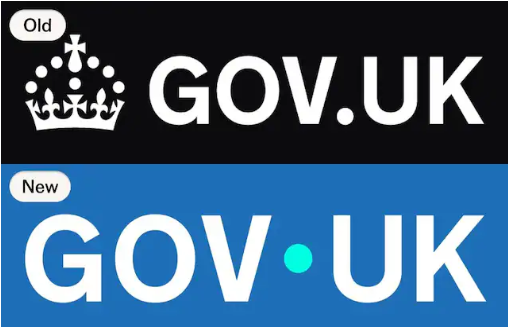
Updated GOV.UK Logo
The GOV.UK logo has also undergone adjustments. The typography remains familiar, preserving brand recognition, but several refinements have been introduced.
Key Logo Changes Include:
Revised Crown Symbol
The design now reflects the Tudor Crown associated with King Charles III.
Refined Dot Placement
The dot between “GOV” and “UK” has been repositioned and recoloured.
Modern Visual Balance
Spacing and proportions have been improved for digital clarity.
These subtle modifications help modernise the identity while maintaining continuity with the original GOV.UK brand.
Expanded Colour Palette
Historically, GOV.UK relied heavily on black, white, and limited accent colours. The new branding introduces a wider palette featuring stronger blues and supporting colours.
This change serves several purposes:
- Better visual hierarchy
- Improved accessibility
- Stronger recognition on digital platforms
- Enhanced flexibility for departments and campaigns
The colour updates also help GOV.UK content stand out more effectively on social media and mobile devices.
How the Rebrand Impacts Users
Easier Mobile Navigation
A major goal behind the GOV.UK website changes branding initiative is mobile-first usability. More than half of GOV.UK traffic now comes from smartphones.
The redesign improves:
- Touchscreen interactions
- Page responsiveness
- Scrolling experiences
- Menu accessibility
- Load efficiency
Users can now complete important tasks more comfortably on smaller devices.
Faster Access to Services
The updated interface attempts to reduce user frustration by simplifying pathways to services and information.
Examples include:
- Clearer search functions
- More visible call-to-action buttons
- Improved category organisation
- Reduced visual clutter
This helps users locate government services more efficiently.
Stronger Cross-Platform Consistency
The new branding also creates consistency across:
- GOV.UK apps
- Government social media channels
- Public digital campaigns
- Online forms and portals
A unified identity strengthens trust and recognition for government services online.
Public Reaction to the GOV.UK Branding Changes
Positive Responses
Many designers, accessibility experts, and technology professionals praised the redesign for its modern approach.
Supporters highlighted:
Improved Accessibility
Many users welcomed the stronger focus on inclusivity.
Better Mobile Experience
The cleaner layout performs better on smartphones.
Contemporary Appearance
Some users believed the previous design looked outdated.
Future-Proofing
The redesign prepares GOV.UK for future digital expansion.
Criticism and Debate
Not everyone welcomed the changes. Social media discussions revealed mixed opinions regarding the new branding.
Common criticisms included:
Loss of Iconic Simplicity
Some people felt the classic black GOV.UK header represented reliability and authority.
Questions About Cost
Critics questioned whether taxpayers’ money should fund visual redesigns during economic pressures.
Resistance to Change
Long-term users often resist redesigns simply because they are accustomed to familiar interfaces.
Despite criticism, such debates are common whenever major public platforms undergo redesigns.
The Role of the Government Digital Service
Leading the Transformation
The Government Digital Service, commonly known as GDS, led the GOV.UK website changes branding project.
GDS was established to improve government technology and simplify digital services across departments. Since launching GOV.UK in 2012, the organisation has gained global recognition for innovative public sector design.
The latest rebrand reflects GDS’s commitment to:
- Digital innovation
- Accessibility leadership
- User-centred design
- Unified government communication
Their work continues to influence public service websites internationally.
How GOV.UK Branding Influences Global Government Websites
International Recognition
The original GOV.UK design inspired governments worldwide. Countries including Canada, Australia, and New Zealand adopted similar principles focused on simplicity and usability.
The new branding update may once again influence public sector digital design globally.
Key lessons other governments may adopt include:
- Mobile-first interfaces
- Accessibility-led design
- Unified digital branding
- Streamlined service delivery
The UK continues to remain influential in government digital transformation.
SEO and Digital Strategy Behind the Rebrand
Supporting Better User Experience
Modern SEO is no longer based purely on keywords. Search engines increasingly prioritise:
- Page speed
- Mobile usability
- Accessibility
- User engagement
- Clear navigation
The GOV.UK website changes branding project indirectly supports search visibility by improving user experience metrics.
Strengthening Trust Signals
Trust plays an important role in both public communication and search performance. A consistent, professional, and accessible interface helps reinforce credibility.
Government websites must appear:
- Reliable
- Secure
- Official
- Easy to understand
The updated branding supports these goals effectively.
The Future of GOV.UK
Expansion Beyond Traditional Websites
The GOV.UK platform is evolving beyond a standard informational website. Future development may include:
More Integrated Apps
Government services may become increasingly app-based.
Digital Identity Systems
Secure digital verification tools could expand significantly.
Personalised Services
Citizens may receive more tailored experiences.
AI-Powered Support
Artificial intelligence could assist with navigating services.
The new branding provides a flexible foundation for future digital innovation.
Conclusion
The GOV.UK website changes branding initiative marks a significant moment in the evolution of British digital government services. While the redesign has generated mixed reactions, its core objectives remain focused on accessibility, usability, mobile optimisation, and future digital growth.
The updated branding reflects changing user behaviours and modern digital standards while preserving the simplicity that made GOV.UK globally respected. Although some users miss the traditional appearance, the new identity positions GOV.UK for the next generation of online public services.
As digital expectations continue to evolve, governments worldwide must adapt their platforms to remain effective, accessible, and trustworthy. The GOV.UK rebrand demonstrates how even the most established public digital services must continue evolving to meet the needs of modern users.
Ultimately, the GOV.UK website changes branding project is not simply about colours or logos. It represents a broader transformation in how governments communicate, deliver services, and build trust in the digital age.
